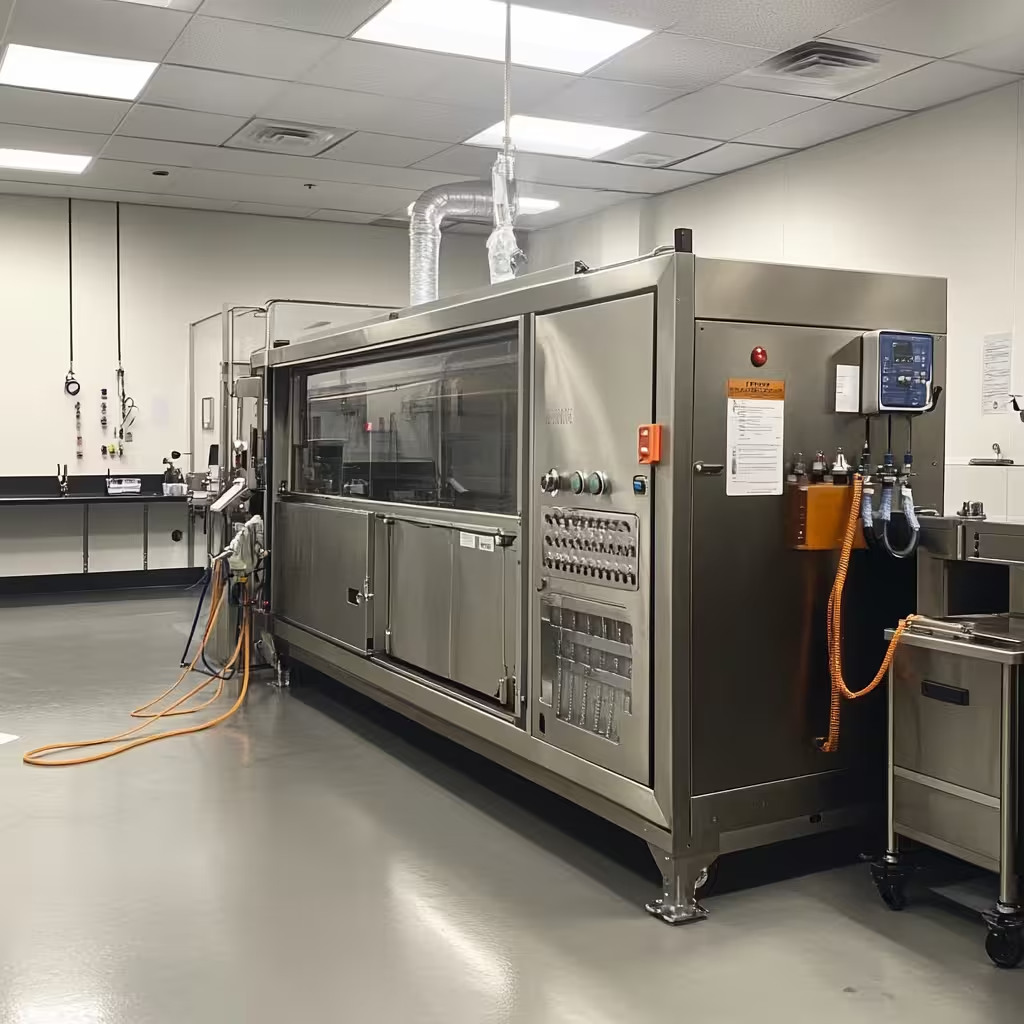
How To Effectively Clean Your Machine Parts With Vapor Degreasing

Precision parts manufacturing demands effective materials selection, minute attention to design details, precise tools and machines, and highly skilled labor. But even a microscopic speck or smudge of grease, oil or dirt on a part can render all of the above useless. For precision parts to fit together to the correct tolerances and for welds to hold, parts must be impeccably cleaned and free of all traces of contamination. Yet, operational efficiency also must be considered. The ideal cleaning system for parts will be both effective and economical.

For many applications, vapor degreasing fits the bill perfectly. Vapor degreasers clean parts efficiently and effectively with minimal labor. They are highly energy-efficient and, because the solvent is purified and recycled within the system for use again and again, solvent costs are extremely low. Vapor degreasers are even space-efficient, taking up very little room in the shop.

How Vapor Degreasing Works

In a vapor degreaser, solvent is contained in two containers or sumps — a boil sump and a rinse sump. In the boil sump, solvent is heated to the boiling point, which need not require much energy if the solvent used has a low boiling point. Rising solvent vapors are kept within the sump by means of cooling coils near the top. When they reach the cool zone, the vapors simply condense back into pure liquid and drop back down into the sump. This creates a two-layer cleaning environment within the sump — a vapor layer above and a liquid layer below.

Parts are cleaned by lowering them first into the vapor layer. Here, solvent vapors hit the cooler surface of the parts and condense. As the droplets of liquid solvent drip off the parts, they carry grease, dirt and oil away with them. Once this happens, the parts may be lowered into the liquid solvent in the boil sump where contaminants are further washed away from every nook and cranny.

A last dip into the rinse sump containing pure liquid solvent ensures the removal of any remaining particles of dirt or grease. Finally, the parts are lifted back up past the cooling coils. Here, solvent quickly evaporates, leaving the parts impeccably clean, dry and ready for the next stage of the assembly process.

How to Clean Machine Parts With Vapor Degreasing

The process for using vapor degreasing to clean machine parts is as follows:

  1. Place parts to be cleaned into a basket.
  2. Lower the basket slowly into the vapor layer of the boil sump and keep it there for a few minutes.
  3. Lower the parts into the liquid solvent layer of the boil sump.
  4. Lift the basket from the boil sump and lower it into the rinse sump.
  5. Lift the basket slowly from the rinse sump through the vapors and past the cooling coils.

In some vapor degreasing systems, parts are put though a final, ultrasonic cleaning cycle to further remove any traces of contaminants from the parts. When done properly the parts should come out clean, dry and cool enough to handle, whichever method is used.

Vapor degreasing is gentle on parts. It doesn’t subject them to scrubbing, high-pressure spraying or high temperatures. It’s a quick and easy process that requires a minimum of training. And it’s cost-effective, both in terms of energy input and solvent use. You can optimize your solvent efficiency even more by choosing the solvent that best suits the needs of your application. If you would like assistance in choosing the best solvent for your vapor degreasing needs, call us at 708-343-6641 or contact us here today.

Recent Posts

How To Effectively Clean Your Machine Parts With Vapor Degreasing

Precision parts manufacturing demands effective materials selection, minute attention to design details, precise tools and machines, and highly skilled labor. But even a microscopic speck or smudge of grease, oil or dirt on a part can render all of the above useless. For precision parts to fit together to the correct tolerances and for welds to hold, parts must be impeccably cleaned and free of all traces of contamination. Yet, operational efficiency also must be considered. The ideal cleaning system for parts will be both effective and economical.

Read More »

Let Enviro Tech Test Clean your Parts

Here at Enviro Tech International degreasing solvents are all that we do, and thus we understand the importance of a high quality standard for precision cleaning in the manufacturing process. We also understand that much thought goes in to deciding not just what products are selected for use in critical cleaning, but that the methods in which these products are to be used are equally important.

Read More »

Choosing the Right Alternative to Trichloroethylene or Perchloroethylene

NEXT-HD Pro is a replacement solvent for TCE and PERC. NEXT-HD Pro is Enviro Tech’s newest 1,2 trans blend using no HFC’s. This solvent blend is perfectly suited for vapor degreasing in modern equipment and general cleaning. Its solvency for hydrocarbon soils is superior to most similar high-trans fluorinated solvent blends.

Read More »

Vapor Degreasing As A Cost-Effective Cleaning Method

When selecting a parts cleaning method, facility managers must keep many factors in mind. One of the most pressing things to consider is the environmental impact of the method chosen, and the need to remain compliant with environmental protection regulations. However, cost containment is also always an essential consideration when selecting any industrial process.

Read More »

Top Ten Most Asked Questions About Vapor Degreasing

When selecting a vapor degreaser, you’re likely to have questions. From equipment set up and placement to questions about the chemicals used in the process, starting a vapor degreasing operation can appear daunting. But with the right guidance, it doesn’t need to be. Below is a simple guide to help you better understand vapor degreasing and the options available to you.

Read More »