
A tier-one aerospace auditor pulled a titanium shear pin out of the rinse rack, and asked for the batch certificate on the drum. He did not care that the pin looked spotless under a 10x loupe. He cared that the solvent in the boil sump was certified under Boeing BAC 5408, that our acid-acceptance log was current, and that our sump temperature shutoff had kicked out before the oil load spiked. In precision job shops, you do not get credit for a clean part if your chemistry is not written into the customer’s process specification.
That reality is why shops running aerospace hardware search for EnSolv 5408. Many machinists know the standard EnSolv name as a heavy-duty degreaser, but the 5408 grade is an engineered formulation developed by Enviro Tech International specifically to clear the qualification battery of Boeing PSD 6-62 under BAC 5408 and BMS 11-11. It was qualified to replace legacy chlorinated solvents like trichloroethylene (TCE) and perchloroethylene (PERC) without sacrificing cleaning muscle or attacking sensitive aerospace alloys.
Here is what actually matters: in the tank, EnSolv 5408 behaves like a high-strength solvent with a Kauri-Butanol (KB) value of 130, boiling around 158°F (70°C). If your shop traveler calls out BAC 5408, running the right drum is only step one. Keeping that solvent in spec across dozens of shifts requires knowing your sump temperatures, your soil loading limits, and how to read an acid-acceptance titration kit.
Why BAC 5408 Demands a Dedicated Stabilizer Package
When you clean ordinary mild steel, almost any aggressive chlorinated or brominated solvent will pull drawing oil. Aerospace jobs do not offer that kind of forgiveness. Boeing formulated the BAC 5408 specification around sensitive, flight-critical metals: titanium alloys like Ti-6Al-4V, magnesium, and high-strength aluminum grades like 2024 and 7075. When an unbuffered solvent is boiled for hundreds of hours alongside reactive fine metal chips, atmospheric moisture, and heat, it begins to hydrolyze and decompose. That breakdown generates hydrobromic or hydrochloric acid, which attacks grain boundaries, corrodes aluminum cladding, and creates the exact conditions that cause hydrogen embrittlement or stress corrosion cracking in stressed titanium.
Enviro Tech formulated EnSolv 5408 specifically to survive those conditions. It is listed on the Qualified Products List (QPL) for Boeing BMS 11-11 and approved under Boeing PSD 6-62 as an authorized replacement for TCE and PERC, along with approvals from Bell Helicopter (Materials Bulletin 1918) and Bombardier (EMCM-001). In an ordinary multi-solvent blend, stabilizers often boil off at different rates, leaving the pure vapor blanket defenseless while the sump holds all the protection. With EnSolv 5408, the inhibitors vaporize and condense uniformly with the solvent, keeping your parts protected as hot condensate washes over blind holes and milled pockets.
Solvency Power at 158°F: What Changes at the Tank
On paper, solvents are compared by theoretical numbers. On the shop floor, those numbers dictate whether parts come out dry or sticky. EnSolv 5408 delivers a KB value of 130, providing cutting power equal to or exceeding trichloroethylene (KB 129) and far outpacing light fluorinated specialty fluids that sit in the 30 to 50 range. That high solvency strength is critical for dissolving polymerized Skydrol hydraulic fluid, heavy chlorinated paraffin waxes, and stubborn drawing lubricants without requiring manual pre-wipes.
Machine Setup: Boil Temperatures, Cutoffs, and Containment
Pure EnSolv 5408 boils at 158°F (70°C). As cutting oils, drawing compounds, and shop soils accumulate in the boil sump, the boiling point of that liquid mixture steadily climbs. Setting your thermal safety cutoff correctly is the difference between repeatable cleaning cycles and a scorched sump. Setting the high-temperature shutoff switch to cut heater power when the sump reaches 175°F (approx. 80°C). If you allow an operator to override that switch to squeeze out one more shift, dissolved oils begin thermal breakdown, baking onto heating elements and depleting the solvent’s stabilizer package at double speed.
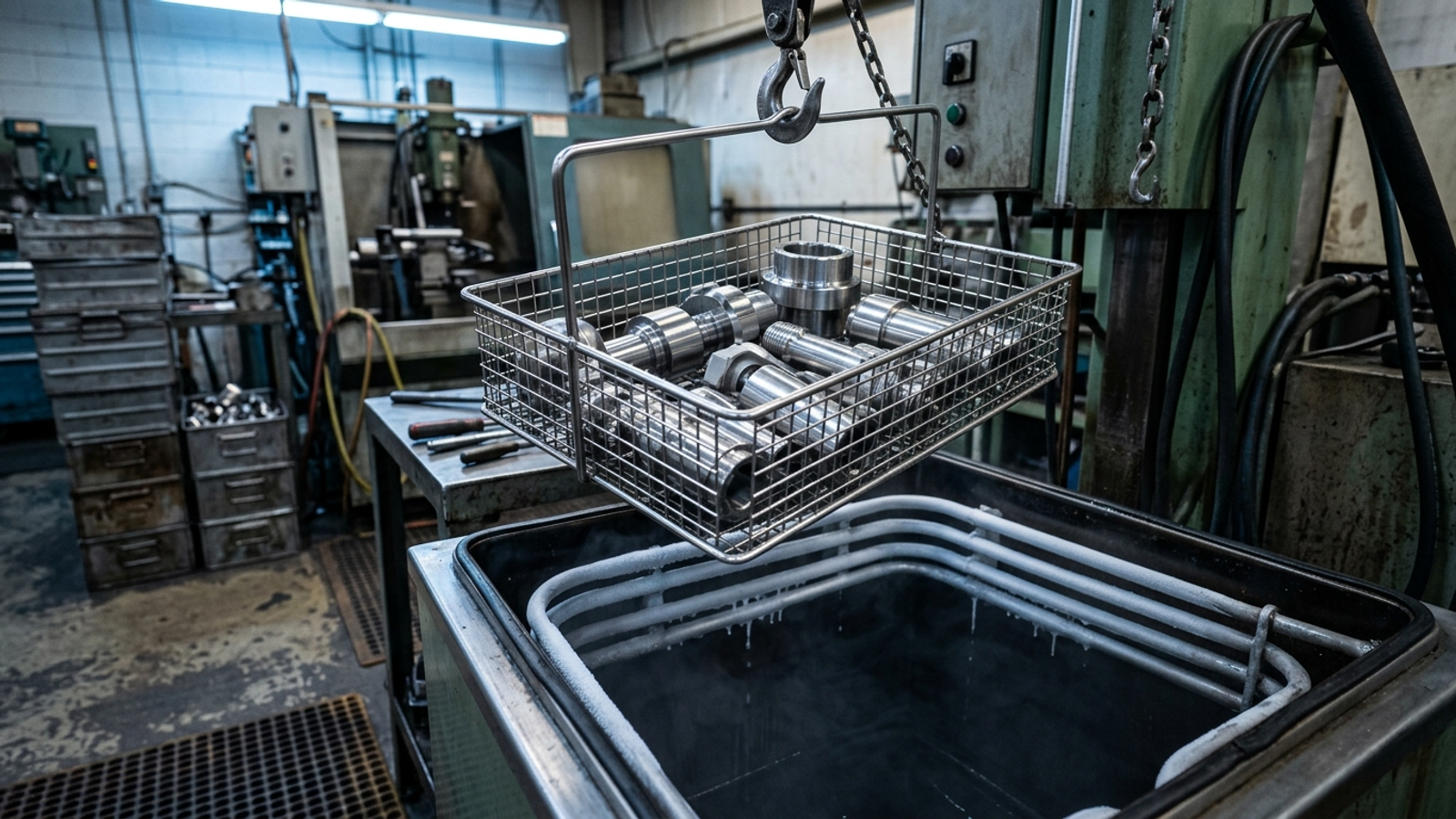
Vapor containment is where shops either protect their operating budget or blow it out the exhaust stack. EnSolv 5408 produces a dense vapor blanket—roughly 4.3 times heavier than ambient air—so it rests stably in the tank under proper machine geometry. That means maintaining a freeboard ratio of 1.0 or higher (freeboard height equal to or greater than tank width), holding primary condensing water coils between 45°F and 55°F, and running secondary sub-zero freeboard chiller coils down near -20°F to create an inverted cold-air blanket. Just as critical is parts handling: keep automated hoists dialed to 11 feet per minute (3.4 m/min) or slower, matching standard vapor degreasing control limits under 40 CFR Part 63 Subpart T. Rushing baskets out faster than that pistons vapor into the room, wasting chemistry and exposing operators.
Sump Health: Acid Acceptance and the Spec 490 Booster
You cannot evaluate solvent life by color or smell alone. A sump full of EnSolv 5408 can look like clean amber honey while its acid-buffering reserve is running on fumes. To prevent solvent breakdown and protect titanium hardware from corrosion, monitor the bath with an Acid Acceptance Test Kit on at least a weekly schedule. The test measures the solvent’s remaining capacity to neutralize acidic degradation byproducts, expressed as weight percent sodium hydroxide (NaOH) equivalent. Fresh EnSolv 5408 tests comfortably above 0.25 wt% NaOH. When your titration drops climb into the warning zone—around 20 drops (0.19 wt% NaOH or below)—you do not have to dump the entire tank. Enviro Tech provides EnSolv Spec 490 Stabilizer Booster, approved under Boeing PSD 6-62, which lets you dose the bath directly (typically 3 pints per 100 gallons at 20 drops) to restore inhibitor levels without interrupting production.
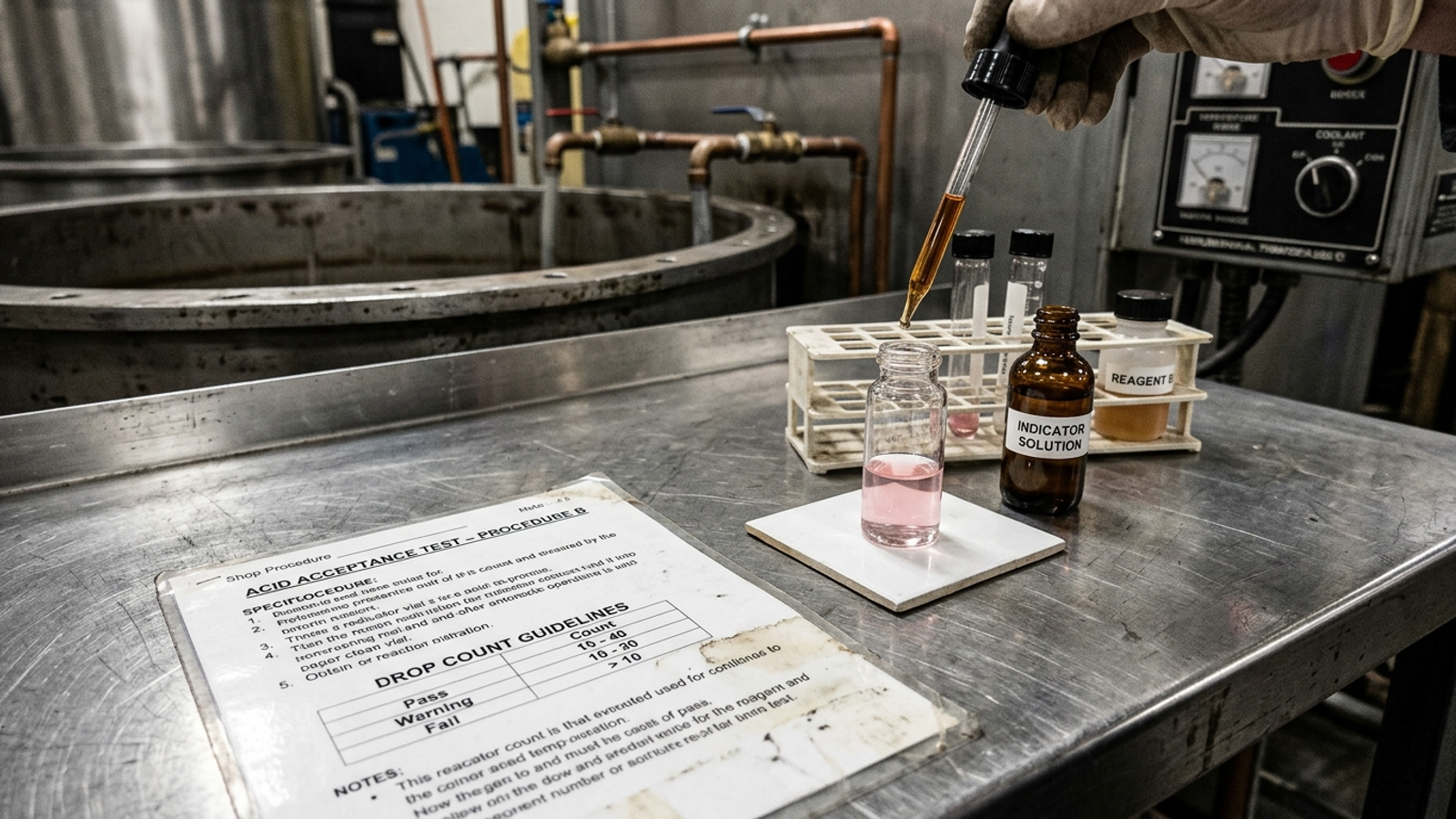
If your titration test requires 29 drops or more (acid acceptance falling below 0.10 wt% NaOH), the stabilizer system is exhausted. Dosing booster into a bath that far gone will not save it; at that threshold, fine aluminum chips and dissolved cutting oils will quickly drive the tank toward an acid turn. Process standards require you to pump the charge, neutralize the tank, and start fresh with virgin EnSolv 5408. Combine that titration log with daily water separator checks: drain off any floating condensate layer every morning, because stagnant moisture combined with warm solvent accelerates hydrolysis.
Material and Seal Compatibility in the Wet Path
On the metallurgy side, EnSolv 5408 earned its approvals because it clears tests that ruin ordinary shop solvents. It conforms to ASTM F 945 (Method A) for titanium alloy stress corrosion, alongside Type 1a hydrogen embrittlement criteria under ASTM F 519. It cleans clad aluminum, magnesium, and high-strength alloy steels without pitting or stock loss. But where job shops frequently get burned is inside their own machine plumbing. Older degreasers built for legacy fluids often have valve seats, pump gaskets, or sight-glass seals made from nitrile (Buna-N), neoprene, or polyurethane. In continuous contact with n-propyl bromide, those materials soften, swell, and fail. Before charging a tank with EnSolv 5408, replace wet-path seals with PTFE (Teflon) or fluoroelastomers such as Viton A or B. Perfluoroelastomers like Kalrez or Chemraz are ideal for severe continuous duty, but standard Viton handles regular vapor zone cycles cleanly.
Staying on Spec vs. Transitioning to Fluorinated Solvents
Why do aerospace machine shops continue purchasing EnSolv 5408 rather than switching tomorrow? Because in defense and aerospace manufacturing, the process routing is frozen. If your purchase order or traveler mandates Boeing BAC 5408, BMS 11-11, or Bell Helicopter Bulletin 1918, you cannot unilaterally pour a different solvent into your tank without triggering an extensive Engineering Change Proposal (ECP) process, complete with coupon testing, tensile testing, and customer sign-off. For shops holding active defense and aerospace contracts, EnSolv 5408 remains the qualified production workhorse that protects deliveries from costly audit rejections.
For facilities that do have the engineering latitude to qualify modern chemistry, or shops whose corporate mandates require phasing out brominated solvents, Enviro Tech developed an alternative path: NEXT HD Pro 5408 and the NEXT HD Pro series. Formulated with 1,2-trans-dichloroethylene and proprietary fluorinated compounds, NEXT HD Pro provides a high KB value of 94, contains zero nPB, zero HFCs, and operates at a modest boiling point of 110°F (43°C).
Side-by-Side: EnSolv 5408 vs. Legacy and Modern Alternatives
When you sit down with process engineering and your EHS lead, you need hard process numbers on the table, not sales talk. Here is how EnSolv 5408 compares against the chlorinated chemistry it originally replaced and the fluorinated blends shaping the next generation of aerospace specs:
| Process Parameter | EnSolv 5408 | Trichloroethylene (TCE) | NEXT HD Pro 5408 |
|---|---|---|---|
| Chemical Base | Stabilized nPB (1-bromopropane) | Chlorinated hydrocarbon | Trans-DCE / Fluorinated blend |
| KB Value (Solvency Power) | 130 | 129 | 94 |
| Boiling Point | 158°F (70°C) | 188°F (87°C) | 110°F (43°C) |
| Flash Point | None | None | None |
| Primary Aerospace Approvals | Boeing BAC 5408, BMS 11-11, Bell 1918 | Phased out across major aerospace specs | Modern vapor degreasing / non-nPB target |
| Ideal Soil Targets | Heavy drawing oils, Skydrol, heavy grease | General shop grease, cutting fluids | Stamping oils, cutting fluids, flux residues |
The Shop-Floor Pre-Flight Checklist
Before you lower a basket of flight hardware into the vapor blanket tomorrow morning, run through these five verification points at the degreaser:
- Verify your high-temperature cutoff setting.
- Run your weekly acid acceptance titration. Count the drops with your test kit. If you hit 20 drops, add EnSolv Spec 490 Stabilizer Booster immediately. If the test requires 29 drops or more, do not add parts: pump the tank, clean out fines, and recharge with fresh solvent.
- Audit hoist speeds and dwell times. Lock automated hoist travel to 11 feet per minute or slower. Allow parts to dwell in the vapor zone until condensation stops sheeting off, then hold in the freeboard until surfaces are bone-dry.
- Drain the water separator daily. Crack the drain valve on your gravity water separator every morning before heating the sump. Removing ambient moisture prevents solvent hydrolysis and keeps hydrobromic acid from forming.
- Inspect seals and gaskets in the wet path. Verify that pump packing, valve seats, and sight glass o-rings are PTFE or Viton. Swap out any legacy Buna-N or neoprene components before they swell and take the machine offline.
Whether your shop travelers are locked into BAC 5408 for current production contracts or you are drafting an engineering change notice to evaluate NEXT HD Pro 5408, process success comes down to qualifying your parts under actual shop soil loads. You can request technical data sheets, SDS documentation, or acid acceptance test kits directly through Enviro Tech International. If you are troubleshooting an unstable sump or planning a transition roadmap, connect with an Enviro Tech chemist to run coupon test cleans in their lab before you make a change in your own tank.